

Kitchen elevation drawings are one of the most important deliverables in any kitchen design project. They show a straight-on view of each wall, revealing cabinet heights, crown molding details, hardware placement, and appliance positions. Whether you are a cabinet dealer presenting a design to a client or a contractor coordinating with installers, elevation drawings are the documents that turn a concept into a buildable plan. This guide explains what kitchen elevation drawings include, why they matter for your business, and how to get them without investing in expensive software or hiring a full-time designer.
What Is a Kitchen Elevation Drawing?
A kitchen elevation drawing is a front-facing, orthographic view of a single wall in the kitchen, drawn to scale. Unlike a floor plan that shows the room from above, an elevation drawing shows the wall as if you were standing directly in front of it. This view reveals every vertical dimension that matters for cabinet installation and construction coordination.
A kitchen cabinet elevation drawing is essential because it shows the relationship between upper and lower cabinets, the exact countertop height, backsplash area, and how appliances fit into the overall layout. It is the document that an installer reads on-site to verify that everything will fit before cutting a single piece of material.
A typical kitchen elevation drawing includes:
- Base cabinets with dimensions - width, height, and depth of each base unit including sink bases, corner cabinets, and specialty storage
- Upper cabinets with dimensions - wall cabinet heights, stacking configurations, and distance from the countertop surface
- Countertop edge and backsplash height - standard 36-inch countertop height and the backsplash area between countertop and uppers
- Crown molding and light rail - decorative trim details at the top and bottom of upper cabinets
- Appliance openings - range, hood, refrigerator, dishwasher, and microwave cutouts with clearance dimensions
- Window and door placements - locations and dimensions of any wall openings that affect cabinet placement
- Hardware locations - knob and pull placement relative to cabinet doors and drawer fronts
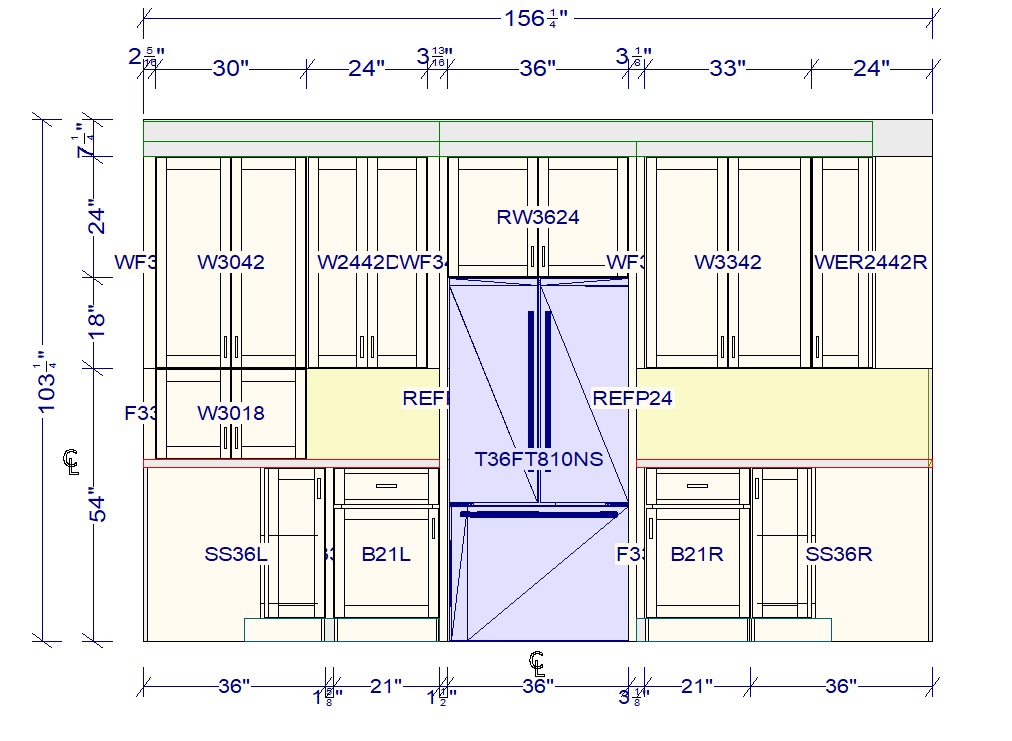
A professional kitchen elevation drawing - showing the refrigerator wall with exact cabinet heights, crown molding, and appliance placement.
Kitchen Elevation vs Floor Plan vs Perspective Drawing
Kitchen projects typically require multiple types of drawings, and each one serves a different purpose. Understanding the differences helps you communicate clearly with clients, contractors, and manufacturers.
A floor plan is a bird’s-eye view of the kitchen layout. It shows the cabinet footprint from above - where the island sits, how much clearance exists between the counter and the opposite wall, and where plumbing and electrical rough-ins need to go. Floor plans are essential for spatial planning but do not show what the walls actually look like.
A kitchen elevation drawing is a straight-on wall view with vertical dimensions. It shows exactly what each wall will look like when the cabinets are installed - cabinet heights, filler sizes, crown molding details, and appliance positions. This is the view that installers and permit reviewers need most.
A kitchen perspective drawing is a 3D angled view showing how the kitchen looks in real life. Perspective drawings and 3D renderings are most useful for client presentations because they give homeowners a realistic preview of the finished space. They show material finishes, lighting, and depth in a way that flat drawings cannot.
All three together give the complete picture. At Fast Kitchen Design, every project includes floor plans, wall elevations, 3D perspective renderings, and an items list - all for $100 per room.
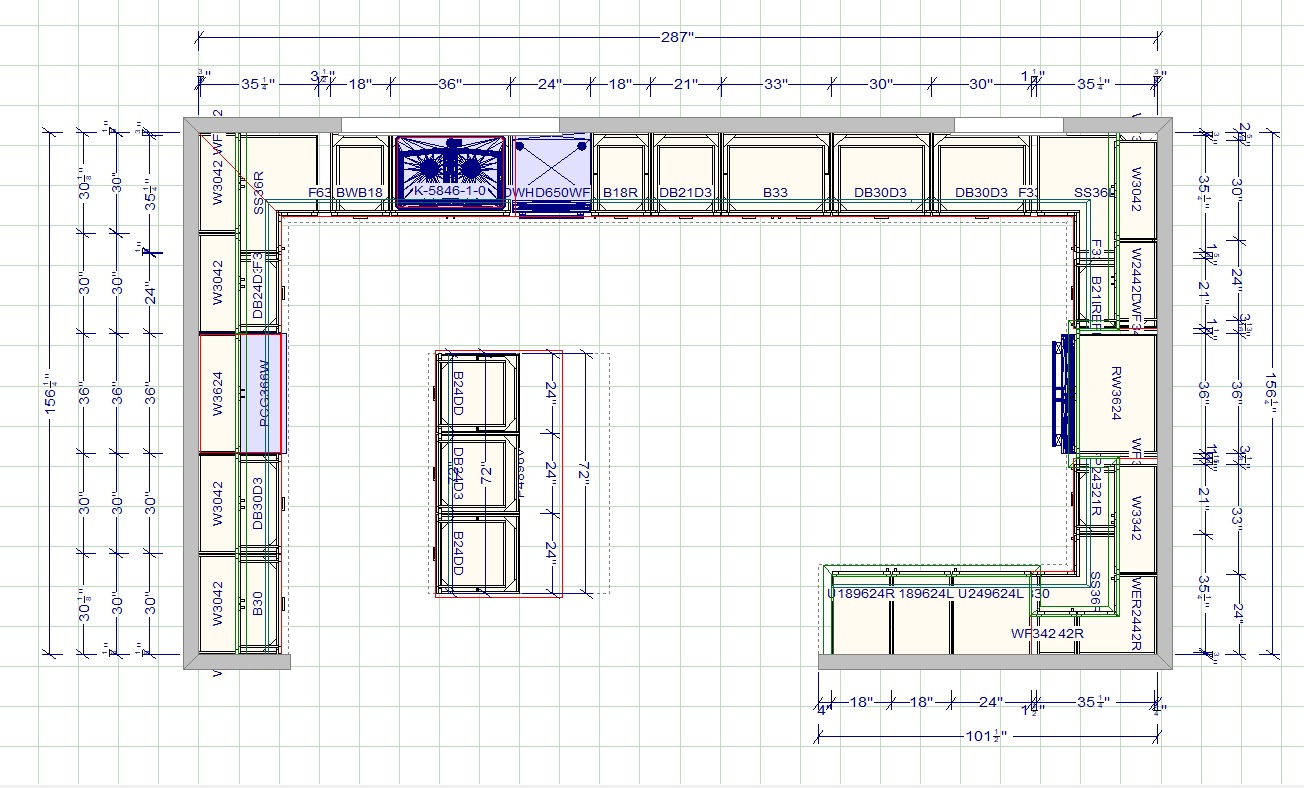
A kitchen floor plan (bird's-eye view) - compare this top-down layout with the front-facing elevation drawing above.
Who Needs Kitchen Elevation Drawings?
Kitchen elevation drawings serve different purposes for different professionals in the kitchen and bath industry:
- Cabinet dealers - use elevations to present designs to clients and generate accurate ordering documents. A kitchen cabinet elevation drawing with model numbers and specifications is the basis for placing manufacturer orders without errors.
- Builders and contractors - need elevation drawings for construction coordination and permit submissions. The elevation view shows exactly where blocking, electrical, and plumbing need to be roughed in before cabinets arrive.
- Cabinet installers - rely on elevation drawings to verify heights, filler widths, and trim details before starting installation. A clear kitchen elevation plan prevents costly mistakes and return trips.
- Homeowners - benefit from seeing elevation views to understand what their kitchen will look like wall by wall, though most homeowners prefer the 3D rendering for visualization purposes.
- Permit offices - some jurisdictions require kitchen elevation drawings as part of remodel permit applications, particularly when structural changes or appliance relocations are involved.
What Makes a Good Elevation Drawing?
Not all kitchen elevation drawings are created equal. The difference between a professional elevation and an amateur sketch can mean the difference between a smooth installation and expensive on-site corrections. Here is what separates professional-grade kitchen cabinet elevation drawings from the rest:
- Accurate dimensions to 1/16 inch - every cabinet, filler, and opening must be dimensioned precisely. Rounding to the nearest inch is unacceptable for ordering and installation.
- NKBA-compliant notation standards - the National Kitchen and Bath Association sets the industry standard for how dimensions, symbols, and callouts should appear on kitchen drawings. Professional drawings follow these conventions.
- Cabinet model numbers and specifications labeled - each cabinet should be identified by its manufacturer model number, not just generic descriptions like “36-inch base.”
- Crown, light rail, and trim details - decorative elements must be drawn accurately because they affect overall height calculations and ordering quantities.
- Appliance clearances noted - the space around ranges, refrigerators, and hoods must meet manufacturer specifications and building code requirements.
- Material callouts where relevant - countertop material, backsplash tile, and any specialty finishes should be noted on the elevation.
- Drawn in professional software - kitchen elevation drawings created in 2020 Design produce accurate, manufacturer-compatible output. Freehand sketches or generic tools like basic SketchUp lack the cabinet-specific intelligence needed for accurate ordering documents.
Need elevation drawings by tomorrow?
Submit your measurements tonight. Get professional elevations, floor plans, and 3D renders by 9 AM. $100/room, unlimited revisions.
“Submit at night, designs in the morning. It’s that simple. We’ve closed more deals because we can show clients designs the next day.”
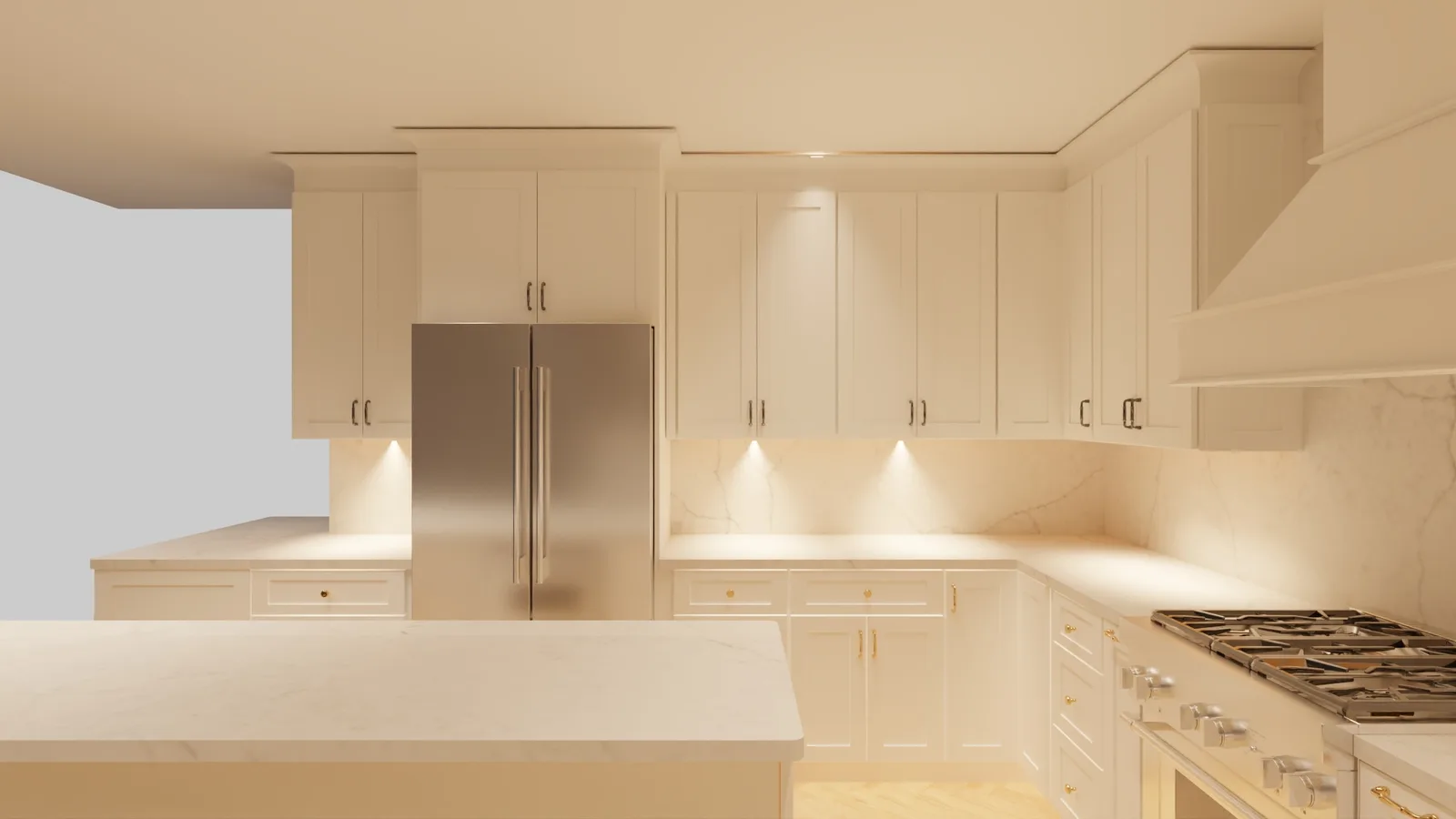
A 3D perspective render - this view shows depth and material finishes that flat elevation drawings cannot convey. FKD includes all three views in every project.
- Showroom Owner
How to Get Professional Kitchen Elevation Drawings
There are three main paths to getting professional kitchen elevation drawings for your projects:
Option 1: Draw them yourself. Purchase kitchen design software like 2020 Design, ProKitchen, or Chief Architect. Annual software costs range from $5,000 to $15,000 for professional-grade tools, plus you need someone on staff trained to use the software. This path makes sense for high-volume dealers who design 10 or more kitchens per month and want full control over the process.
Option 2: Hire a freelance kitchen drafter. Independent drafters typically charge $300 to $500 per project. Quality and turnaround times vary significantly from one freelancer to the next, and you lose continuity when your go-to drafter is unavailable or overloaded.
Option 3: Outsource to Fast Kitchen Design. For $100 per room, you receive a complete design package that includes floor plans, kitchen elevation drawings for every wall, photo-realistic 3D renderings, and an items list with accurate pricing. Everything is drawn in 2020 Design by trained kitchen specialists, and projects submitted in the evening are delivered by 9 AM the next morning.
The outsourcing approach eliminates the software cost, training time, and staffing overhead entirely. You send measurements and preferences - we send back everything your client, installer, and manufacturer need. More than 200 kitchen dealers across North America already use this model to scale their businesses without hiring designers.
View the full list of deliverables included in every project, or learn more about how to outsource kitchen design to a dedicated team.
Need Elevation Drawings by Tomorrow?
Submit your project tonight and receive professional kitchen elevation drawings, floor plans, 3D renderings, and a complete items list by 9 AM tomorrow morning. No software required, no commitments - just professional results delivered on your timeline.


